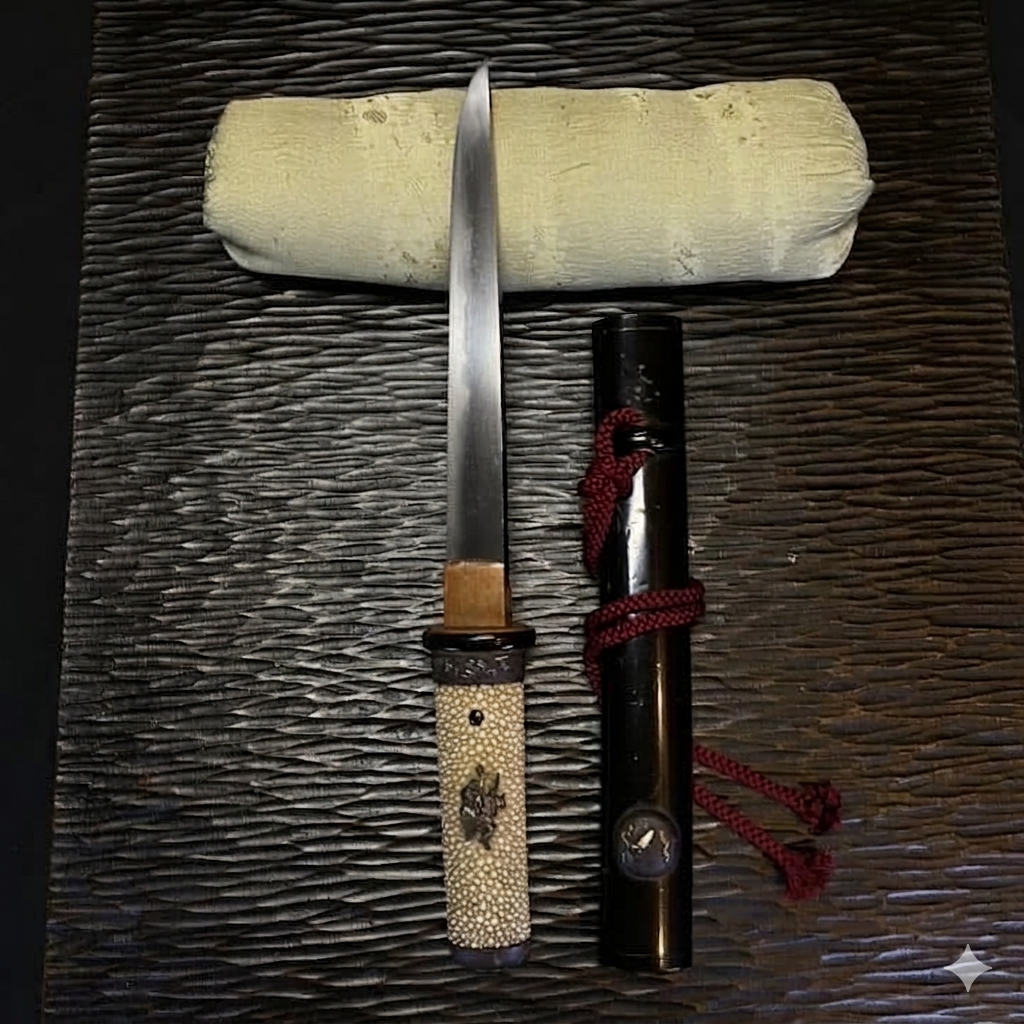
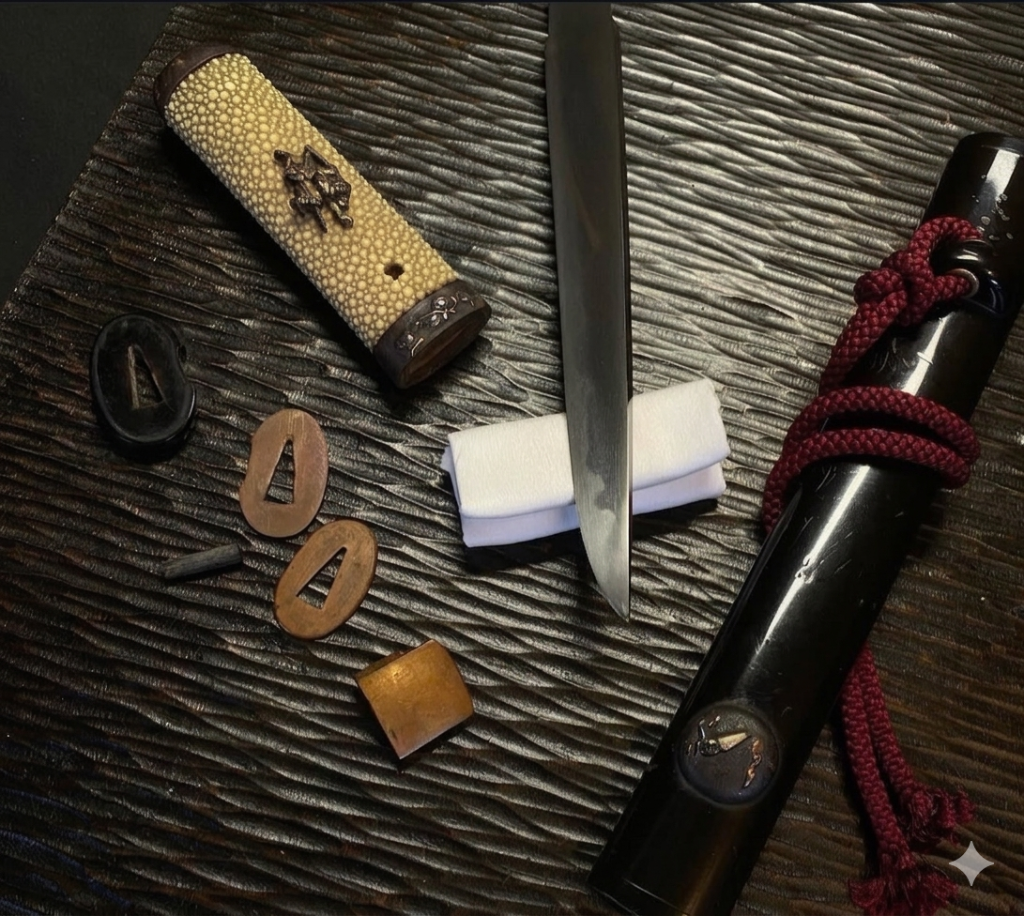
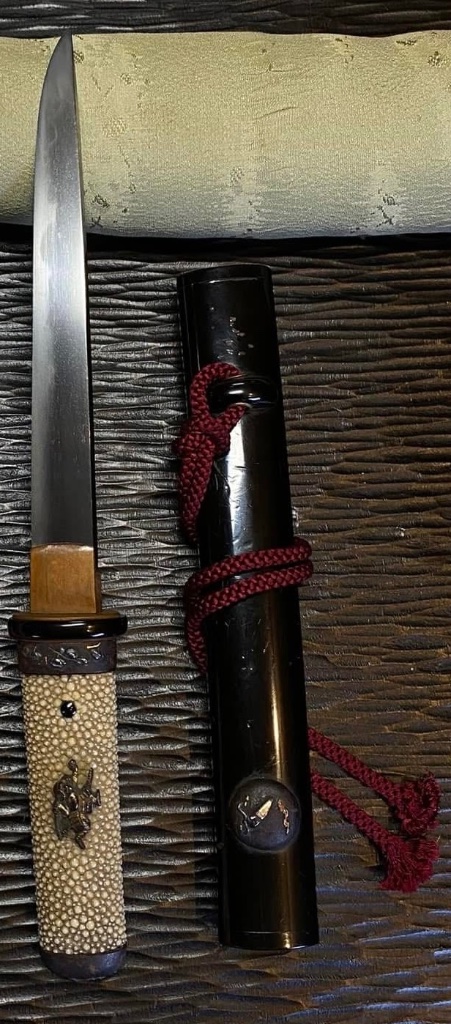
This is a very small Tanto/ Kaiken mounted in a equally lovely Koshirae —— the b
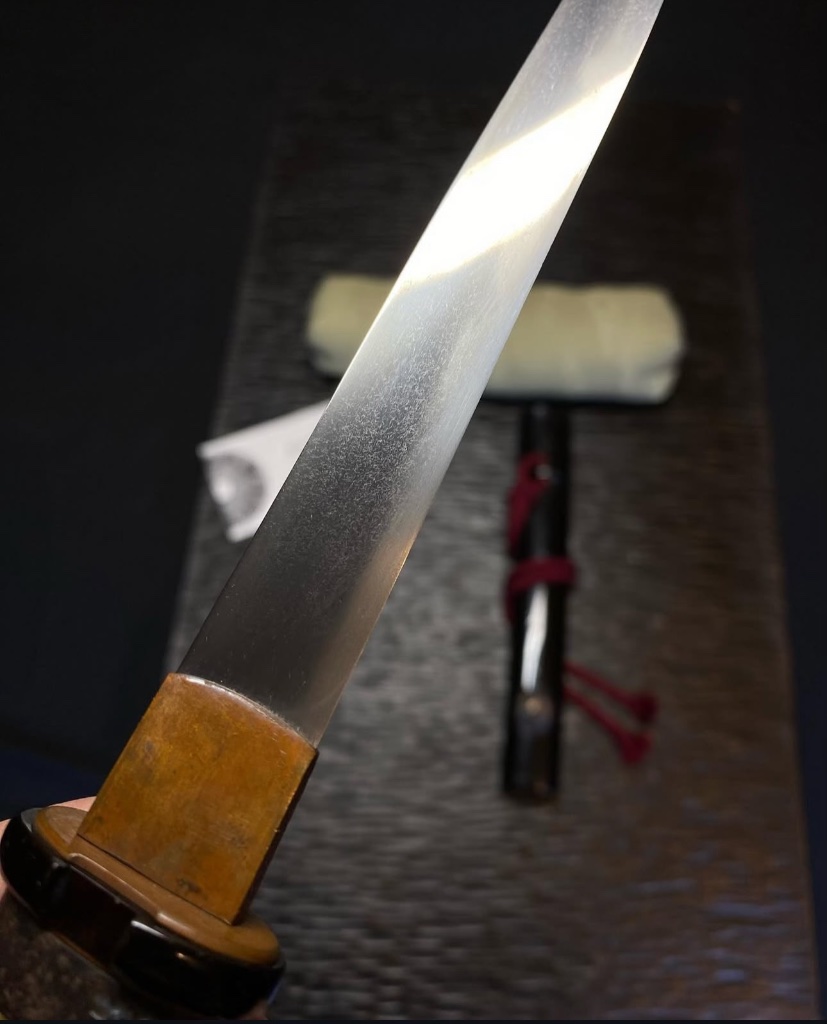
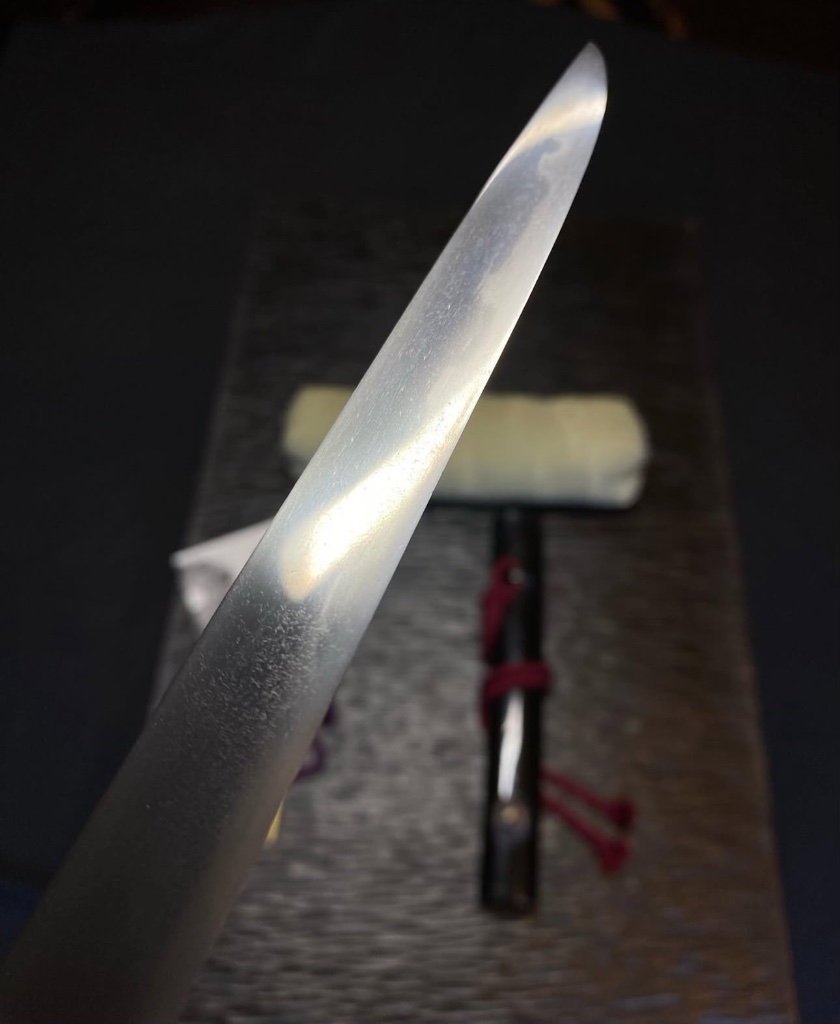
Due to the tiny size of the blade, clear demonstration of detailed Hamon activities is very difficult under my current setup, but if you look closely you can still tell that the blade has a lovely Hamon with rich activity.
This is a very small Tanto/ Kaiken mounted in a equally lovely Koshirae —— the blade is short and narrow, that only has a Moto-haba of 18mm and Nagasa of less than 15.5cm (~6 inches), but it's also not overly thin, with a Moto-gasane of ~6mm, which combined with the Sugata, it overall looks delicate but also solid and not "fragile" at all. Due to the tiny size of the blade, clear demonstration of detailed Hamon activities is very difficult under my current setup, but if you look closely you can still tell that the blade has a lovely Hamon with rich activity. The Koshirae is mounted with custom made tiny sized fittings, they are about half the size of ordinary fittings. The Saya also has a round iron Saya-Kanagu buckle installed and used as 返り角Kaeri-zuno. Based on the overall style, I personally attribute both the blade and Koshirae to late Edo to Meiji Period, more study awaiting. Overall, a very beautiful and interesting set of art work with fine craftmanship, excellent for collection and a solid candidate for a Shinsa submission —— both blade and Koshirae.
5 high-resolution detail views — use zoom viewer to inspect hamon, jihada, and metalwork
Mumei
無銘Mumei (無銘) denotes a blade or fitting without a maker's signature. Unsigned works may be the product of a master who chose not to sign, an apprentice piece, or a work whose tang was shortened over time, removing the original inscription.