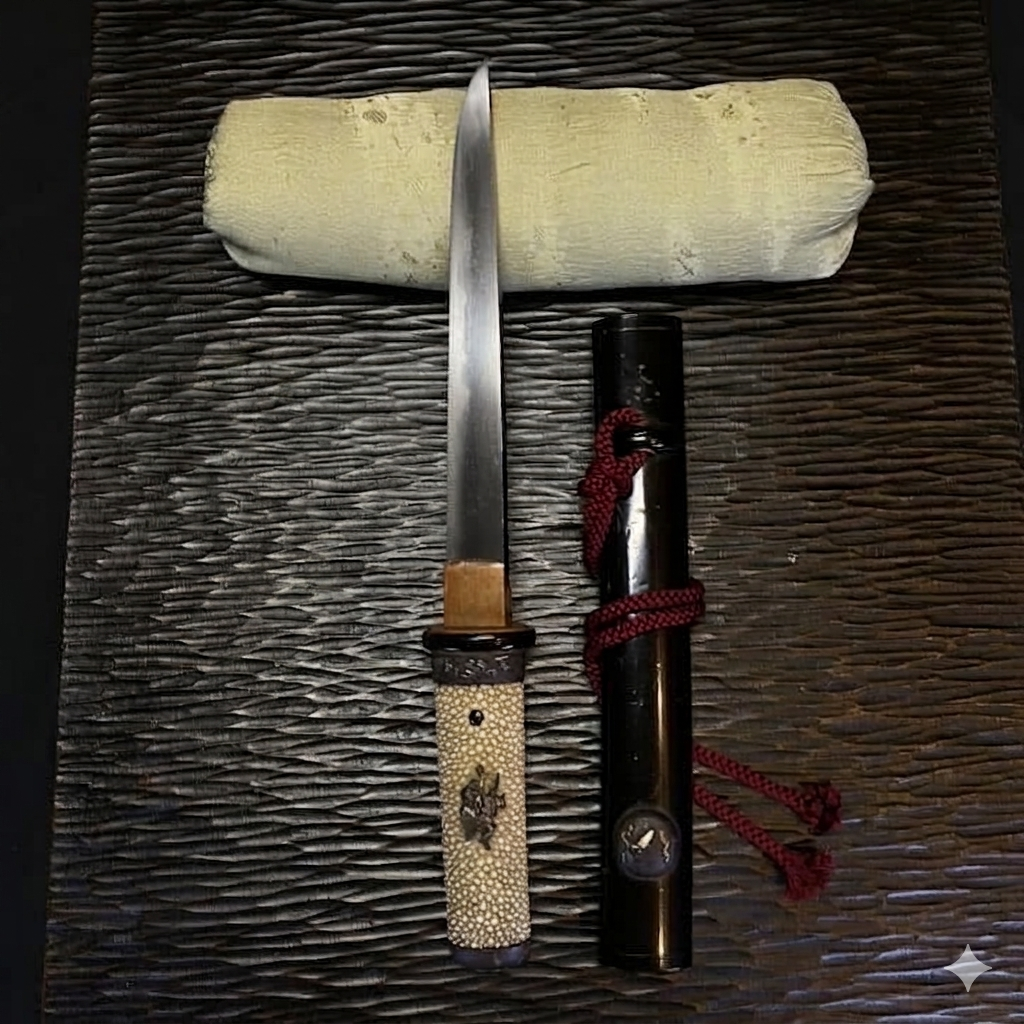
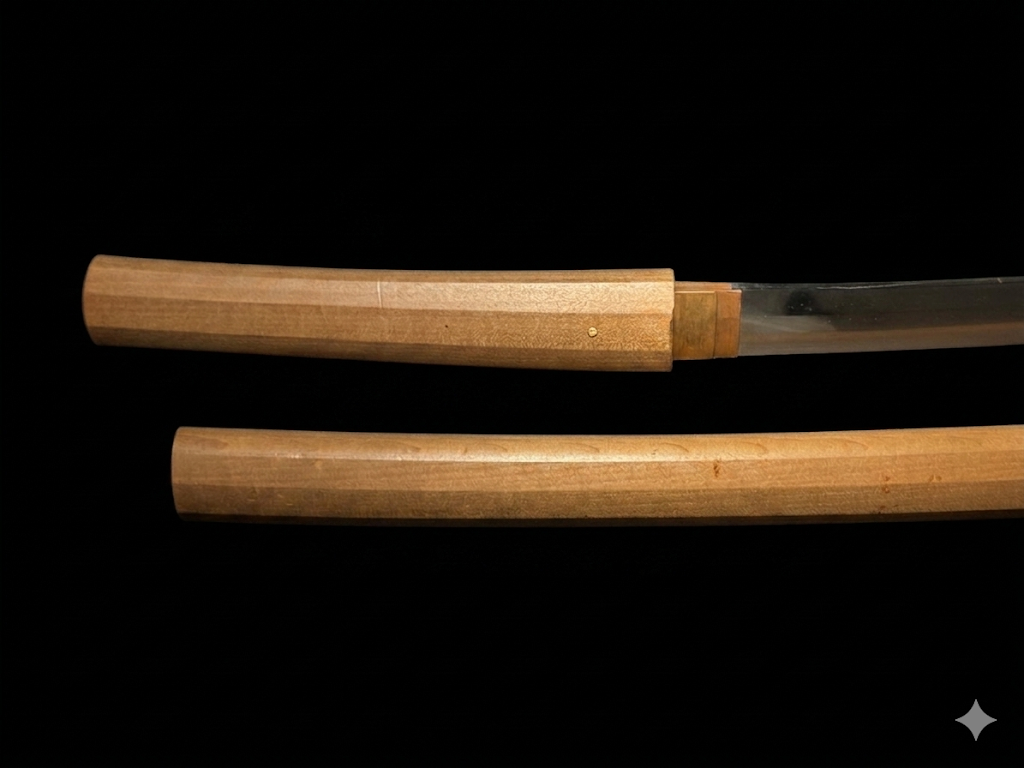
Eight centuries of Japanese sword culture, from the curved elegance of the Heian court to the neo-classical mastery of the Shinshinto revival.
794–1185
Emergence of the curved tachi for mounted warriors.
No pieces catalogued
1185–1333
The golden age — graceful tachi with itame hada and nie-laden hamon.
1333–1392
Extended blades, dynamic ōsuriage, bold experimentation.
1336–1573
Proliferation of uchigatana; regional schools flourish.
3 pieces in this period
Houki no Kuni Kurayoshi Hiroyoshi Saku- 伯耆國倉吉住廣賀作
Hiroyoshi
Masayuki- 正行
Masayuki
Koto End of Muromachi period (Eiroku era about 450 years ago) Mino
Kanemichi
1467–1615
Mass production meets refinement — practical blades for constant war.
1596–1780
New swords — Edo-period revival of classic forms with technical mastery.
6 pieces in this period
Mino no Kami Fujiwara Masatsune- 美濃守藤原政常
Masatsune
Masanari- 正成
Masanari
Mumei Tsuba
Mumei
Sadamitsu- 貞光
Sadamitsu
Kawachi Daijō Fujiwara Kunisada- 河内大掾藤原国定
Kunisada
1781–1876
Neo-classical renaissance; Suishinshi Masahide's restoration movement.
1 piece in this period
Sukemitsu- 助光
Sukemitsu
1876–present
Modern forging traditions honoring ancient methods.
Mino no kuni Seki-ju Tofuji saku- 美濃國関住外藤作
Tofuji