Onitake Rikichi- 長崎住 鬼武利吉
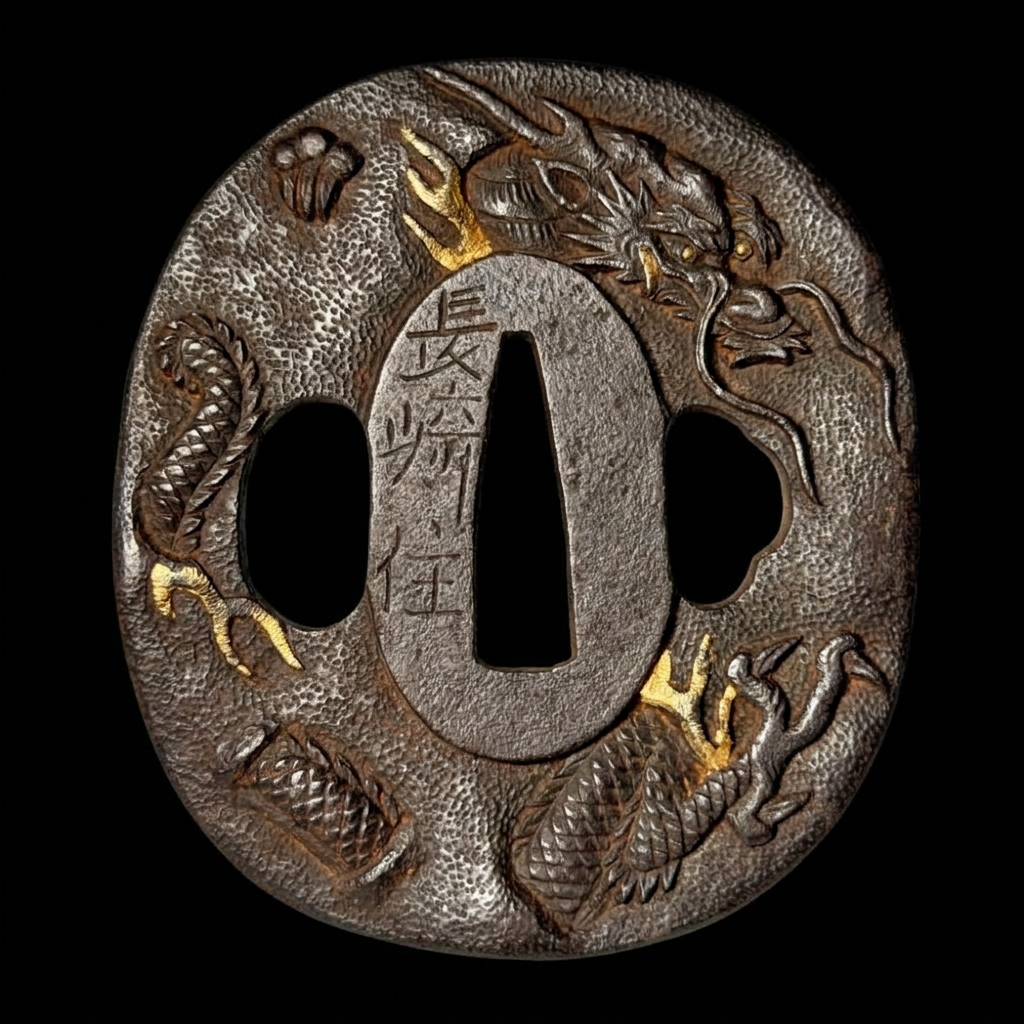
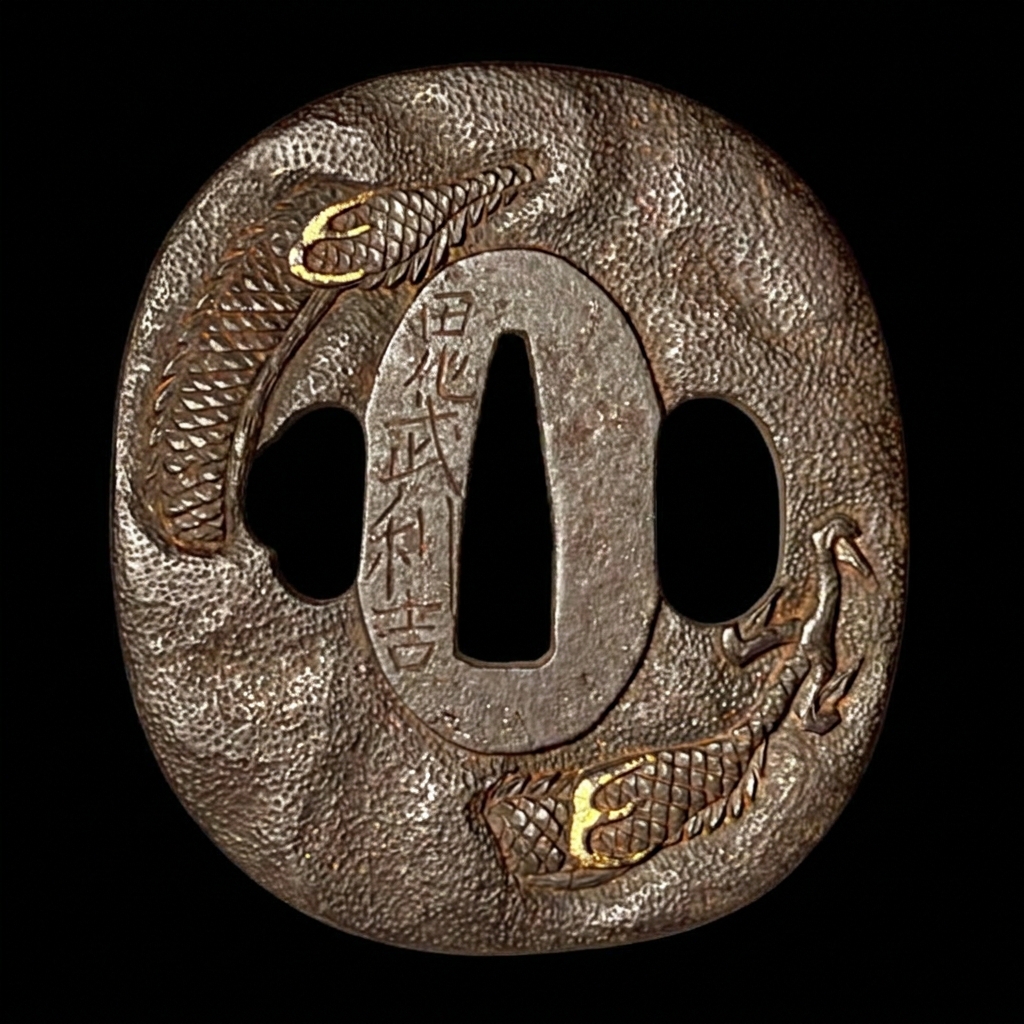
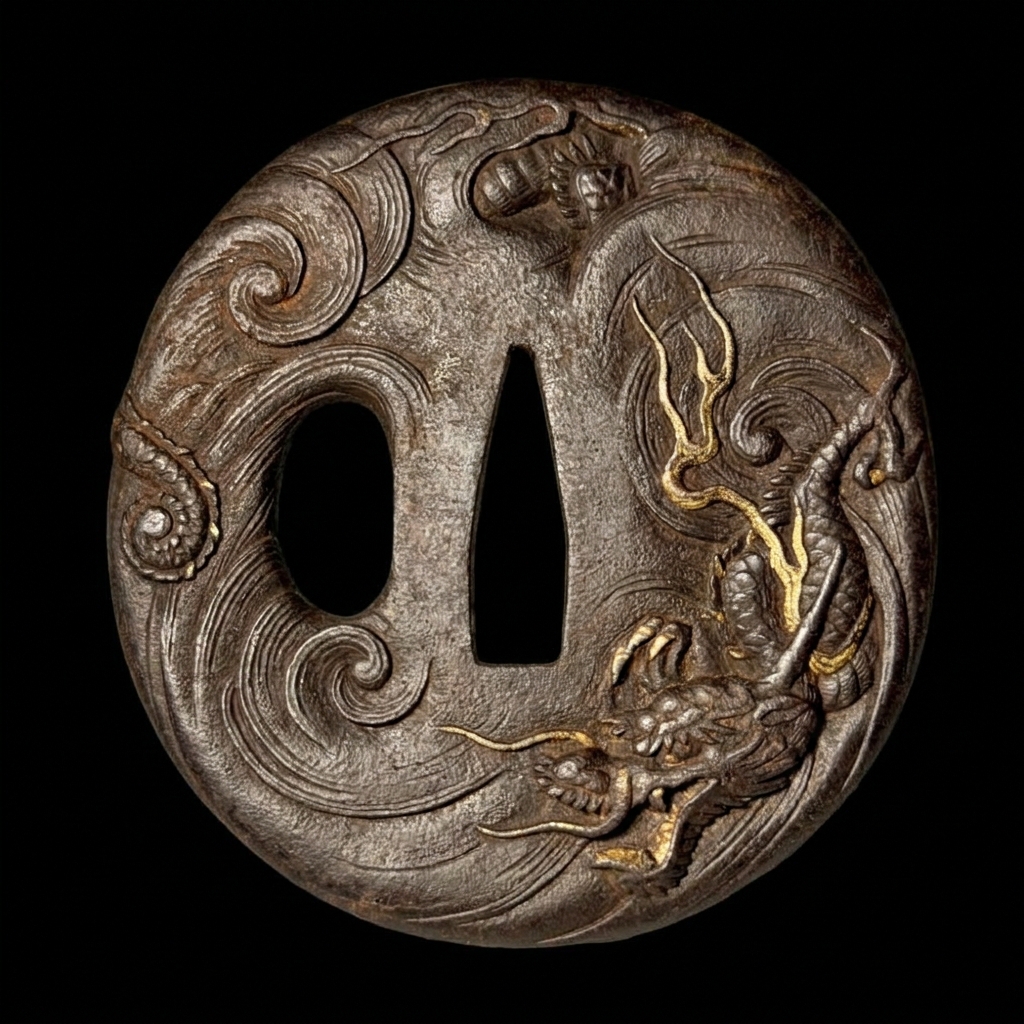
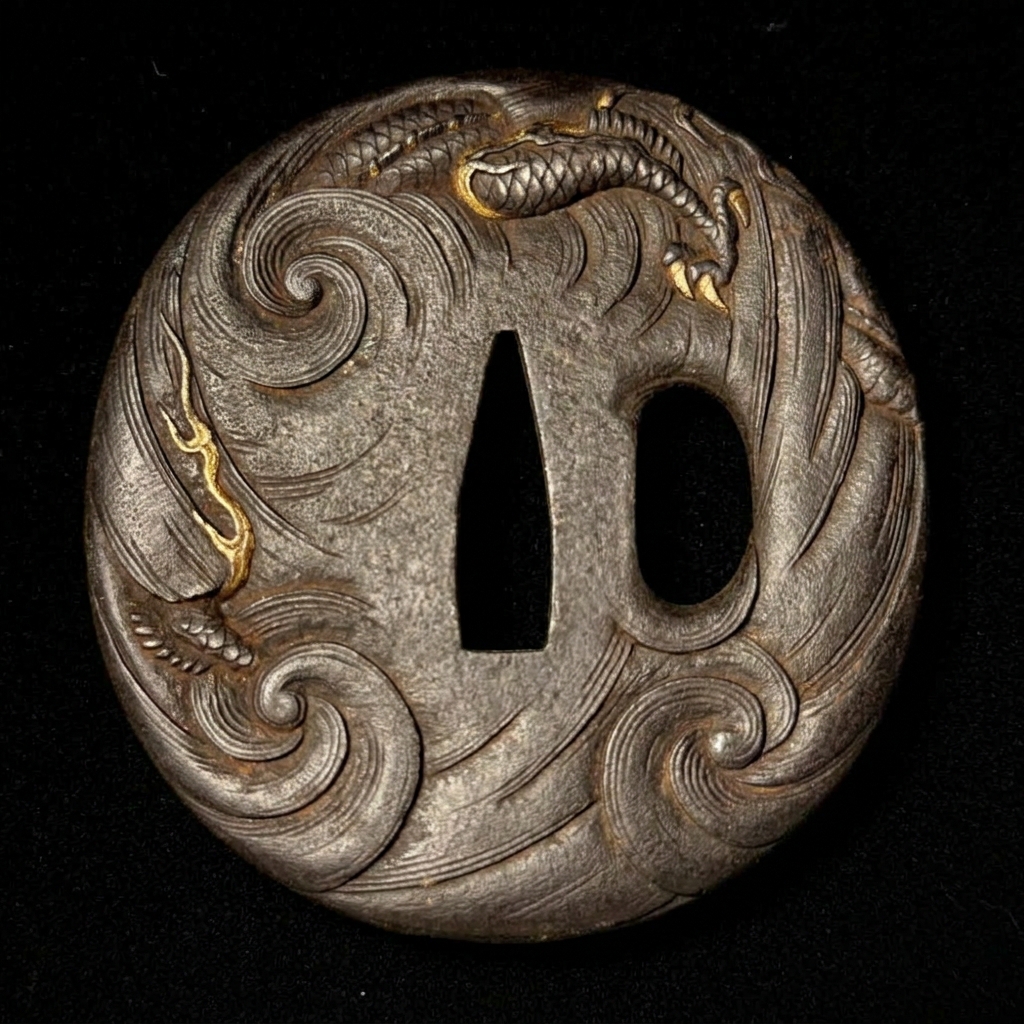
This married daisho pairing unites two distinct iron tsuba through a shared thematic motif of dragons (龍). While forged by different hands, the pieces were deliberately matched to create a cohesive aesthetic for a traditional katana and wakizashi mounting. The larger katana tsuba is unsigned and is characterized by deeply carved, three-dimensional swirling waves dominating the iron ground. The smaller wakizashi tsuba features a flatter, textured iron ground serving as the backdrop for a coiled dragon with gold highlights. The seppa-dai is signed on both sides, identifying the maker as Onitake Rikichi, a resident of Nagasaki. Together, the pairing demonstrates the historical practice of matching complementary regional works to complete a functional and visually unified daisho. Material: Iron (鉄) with gold accents Dimensions: Katana- Width 7.0cm x Height 6.5cm, Thickness 0.5cm, Weight 132g Wakizashi- Width 7.0cm x Height 6.0cm, Thickness 0.5cm, Weight 117g
4 high-resolution detail views — use zoom viewer to inspect hamon, jihada, and metalwork
Onitake Rikichi
長崎住 鬼武利吉Onitake Rikichi (鬼武利吉), also read Onitake Toshiyoshi, signed his work 'Nagasaki jū' (長崎住, 'resident of Nagasaki'). He was a tosogu artist in the Nagasaki tradition and a student of Hattori Yoshitsugu (Shinshichi), who in turn trained under Noda Mitsuhiro, founder of the Yagami school. He is recorded as working in both Nagasaki and Hagi. Like the Yagami carvers, his work is associated with finely carved iron and Chinese- and nanban-inspired motifs. Signed examples are scarce; known pieces are in the James McElhinney collection and the Peabody Essex Museum. An NBTHK Hozon attribution of a carved iron-over-brass kozuka to Yagami has been suggested to be more precisely his work. His dates are not firmly documented, so the period is an estimate based on his teacher's lineage (Mitsuhiro I was active c. 1750–1800).